
Natural Management of Thyroid Disorders — Evidence-Based Ayurveda + Modern Medicine
A Samarpitam Ayurveda clinic guideHow science and Ayurveda agree on practical, root-level care for thyroid health Thyroid problems are common — fatigue, weight changes, irregular cycles, brain fog, and cold intolerance. Many patients want natural help, but worry about safety, interactions, and whether ancient approaches stand up to modern science. At Samarpitam Ayurveda, we combine

samarpitamchikitsalaya@gmail.com
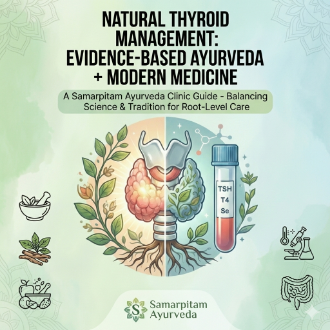
A Samarpitam Ayurveda clinic guide
How science and Ayurveda agree on practical, root-level care for thyroid health
Thyroid problems are common — fatigue, weight changes, irregular cycles, brain fog, and cold intolerance. Many patients want natural help, but worry about safety, interactions, and whether ancient approaches stand up to modern science. At Samarpitam Ayurveda, we combine evidence and classical wisdom so you get safe, effective, and personalised thyroid care.
Hypothyroidism, hyperthyroidism, natural thyroid management, Ayurveda for thyroid, ashvagandha thyroid, selenium and thyroid, iodine and thyroid, Samarpitam Ayurveda, thyroid treatment natural, thyroid hormone balance.
Quick scientific snapshot (what modern medicine says)
- The thyroid gland makes hormones (T4 and T3) that regulate metabolism. The hypothalamus–pituitary–thyroid axis controls hormone production and feedback. Treatment for overt hypothyroidism is levothyroxine replacement guided by TSH and free T4 levels.
- Autoimmune thyroid disease (Hashimoto’s, Graves’) is the leading cause of thyroid dysfunction in many regions; inflammation and autoantibodies (anti-TPO, anti-TG) play a key role.
- Nutrients that matter: iodine is essential but both deficiency and excess cause problems; selenium influences thyroid autoimmunity and selenium supplementation shows benefit in selected cases; other nutrients (zinc, iron, vitamin D) are relevant for clinical context.
Ayurvedic framing — how classical texts explain thyroid problems
Ayurveda doesn’t use the word “thyroid,” but the classical concepts align closely with modern understanding:
- Rasa (plasma/nourishment) and Shukra/Artava (reproductive/essence tissues) depend on proper digestion (Agni) and balanced doshas. When Agni is impaired and Ama (undigested toxic residue) forms, deeper tissues (dhatus) may become vitiated — resulting in chronic metabolic and endocrine disturbances.
- Many functional features of hypothyroidism (weight gain, sluggishness, cold intolerance) fit the pattern of Kapha increase + Vata slowing, while hyperthyroid features resemble Pitta-Vata aggravation. Ayurvedic management therefore focuses on correcting Agni, removing Ama, and rebalancing doshas with diet, lifestyle, herbs and targeted therapies.
This “root cause” orientation—treat digestion, inflammation, and rhythm first—matches current recommendations that metabolic, nutritional, immune and lifestyle factors influence thyroid outcomes.
Evidence that some Ayurvedic herbs & nutrients have measurable effects
Below are the most clinically relevant findings that help shape an integrative plan.
1) Selenium — best evidence for autoimmune thyroid help
Multiple randomized trials and meta-analyses show selenium supplementation (usually 100–200 µg/day in selenium-deficient patients) can reduce thyroid autoantibody levels and improve some clinical features (and has shown benefit in mild Graves’ orbitopathy). Selenium’s antioxidant role in seleno-enzymes (eg. glutathione peroxidase) plus immune-modulating effects explain these outcomes. Selenium therapy seems most useful when baseline selenium status is low; indiscriminate high doses are not advised.
Clinical take: Check selenium status if considering supplementation. A supervised 3–6 month course (not lifelong at high doses) is the usual approach in studies.
2) Ashwagandha (Withania somnifera) — promising for subclinical hypothyroidism
A randomized pilot trial reported normalization of thyroid parameters in people with subclinical hypothyroidism after ashwagandha root extract vs placebo over 8 weeks. Mechanisms proposed include adaptogenic support to the HPA axis and stimulatory effects on thyroid hormone production in certain contexts. Larger trials are needed, but evidence is promising for subclinical cases under supervision.
Clinical take: Ashwagandha can be considered for subclinical hypothyroid patients who are closely monitored; it is not a substitute for levothyroxine in overt hypothyroidism without endocrinologist supervision.
3) Commiphora mukul (guggulu) — traditional use with preclinical and small clinical data
Guggulu has a long Ayurvedic history in metabolic and thyroidal conditions. Animal studies and some clinical reports suggest guggulu extracts may stimulate thyroid activity and improve symptoms of hypothyroidism; however, evidence quality varies and formulations differ. Recent clinical formulations combining guggulu with other herbs have shown TSH improvements in trials, but larger, rigorous RCTs are still limited.
Clinical take: Use guggulu preparations from reputable suppliers and monitor thyroid labs. Avoid unsupervised use with antithyroid drugs.
Practical Ayurvedic + modern protocol at Samarpitam (evidence-informed, patient-centric)
Important: Always individualise care. If you are on thyroid medicines (levothyroxine or antithyroid agents), don’t start/stop herbs or supplements without your prescriber’s approval. Herbs can alter labs and interact with drugs.
1) Assessment (first visit)
- Full history (symptoms, duration, family history of autoimmunity).
- Labs: TSH, free T4, free T3, anti-TPO, anti-TG, serum selenium if available, serum iodine status when indicated, vitamin D, ferritin, B12, fasting glucose/lipids.
- Dosha and Agni assessment (Ayurvedic exam) so treatment targets root cause (eg. Agnimandya, Ama, Vata/Kapha dominance).
2) Immediate, safe steps everyone can use
- Dietary rhythm (Dinacharya): regular meals, avoid late heavy meals, warm cooked foods to support Agni. (Ayurvedic + modern evidence supports regular meal timing for metabolic rhythm.)
- Avoid excess iodine supplements/seaweed: iodine is essential but excess can worsen autoimmune thyroid disease; the ATA advises caution with high-dose iodine supplements. Use iodized salt per dietary guidelines rather than kelp supplements unless deficiency is proven.
- Address nutrient deficiencies: correct iron, vitamin D, B12, and zinc deficiencies to optimise thyroid hormone transport and conversion.
- Gentle physical activity & sleep: regular movement and sleep hygiene support metabolic and endocrine balance.
3) Ayurvedic therapeutic plan (examples we personalise)
- Ama pachana & Agni rekshaka: formulations and dietary measures to reduce Ama and improve digestion (herbal teas with ginger, cumin, fennel; manjishta/ trikatu blends where appropriate).
- Herbal adjuncts (clinically supervised):
- Ashwagandha extract for subclinical hypothyroidism or stress-related endocrine dysregulation (monitor TSH).
- Guggulu (processed/shuddha guggulu) used in low-dose, standardised preparations for metabolic sluggishness where indicated.
- Selenium (as selenomethionine) in selected autoimmune cases, after checking baseline status and for a defined period (3–6 months) under supervision.
- Panchakarma adjuncts (when indicated): mild detoxification and therapies to rebalance doshas and improve circulation and digestion — chosen based on constitution and laboratory stability.
4) When to use conventional thyroid medication
- Overt hypothyroidism (elevated TSH with low free T4) — levothyroxine remains the standard of care to prevent complications; Ayurveda complements, but does not replace, hormone replacement. Follow endocrinology/ATA guidelines for dosing and monitoring.
- For Graves’ disease or severe hyperthyroidism, urgent endocrinology care is essential. Selenium can help in mild Graves’ orbitopathy, but hyperthyroidism requires specialist management (antithyroid drugs, radioiodine, surgery when indicated).
Safety, interactions & red flags (must knows)
- Do not stop levothyroxine when starting herbs — dosage adjustments require lab monitoring. Levothyroxine absorption can be affected by food, iron, calcium, and some herbs — take it on an empty stomach per guidelines.
- Avoid high iodine supplements or kelp in autoimmune thyroid disease; they can trigger or worsen dysfunction.
- Selenium overdose is harmful (neurological symptoms, hair/nail changes). Only use tested dosing and monitor.
- Red flags: rapid weight loss/gain, palpitations, chest pain, vision changes, neck pain with fever, pregnancy — seek immediate medical evaluation.
Patient stories & outcomes (how Samarpitam frames success)
At our clinic we see three common goals: (1) stabilise labs under medical care if needed; (2) reduce symptoms (fatigue, weight gain, brain fog); (3) rebuild digestion and rhythm to prevent recurrence. We combine gentle Ayurvedic therapies, targeted herbal/supplemental support (with lab monitoring), diet and sleep restructuring, and communication with patients’ physicians when patients are already taking thyroid medication.
Practical plan you can start today
- Get a baseline panel: TSH, free T4, anti-TPO; plus ferritin & vitamin D.
- Stop kelp/iodine supplements; rely on balanced diet and iodised salt unless your doctor advises otherwise.
- Prioritise daily warm meals, gentle morning movement, and consistent sleep.
- Book a Samarpitam consultation for personalised Ayurvedic plan including safe herbs, selenium check and monitoring.
Final words — why integrate Ayurveda and modern medicine?
Ayurveda offers deep, time-tested strategies for digestion, rhythm, and lifestyle that modern science is increasingly validating (for example: nutrient modulation, adaptogens, selenium in autoimmune thyroid disease). When combined safely with modern diagnostics and hormone replacement when needed, this integrative approach increases the chances of symptomatic relief, improved quality of life, and safer long-term outcomes.
At Samarpitam Ayurveda, we help you heal the root — not just the labs. For personalised plans, lab review and monitored herbal integration, visit www.samarpitam.com or contact our clinic.
Scientific references (select, high-value sources cited above)
- Guidelines for the Treatment of Hypothyroidism (American Thyroid Association).
- Ashwagandha randomized trial — Sharma AK et al., Efficacy & Safety of Ashwagandha Root Extract in Subclinical Hypothyroid Patients (2018).
- Selenium and thyroid autoimmunity — meta-analyses and systematic reviews (Wang YS 2023; Hu 2021; Huwiler 2024). Evidence supports antibody reduction in selected patients.
- Selenium supplementation in mild Graves’ orbitopathy — European guidelines / EUGOGO (2016 and updates).
- ATA statement on risks of excess iodine — guidance against high-dose kelp/iodine supplements.
- Guggulu (Commiphora mukul) clinical and preclinical studies — trials show potential thyroid-stimulatory effects; more RCT data needed.
Emergency? Contact Us


